
Many quality teams continue to evaluate only a small portion of their calls, chats, or emails, and then extrapolate the results to the entire volume of activity. This traditional sampling approach has long been acceptable—but it is now showing its limitations in the face of rising volumes, regulatory requirements, and performance expectations.
The goal is not to replace quality assessors with a machine, nor to listen to more interactions than permitted. The goal is to better focus our analysis—by using AI to detect weak signals within the compliant scope, and then directing humans toward the cases that truly require their expertise.
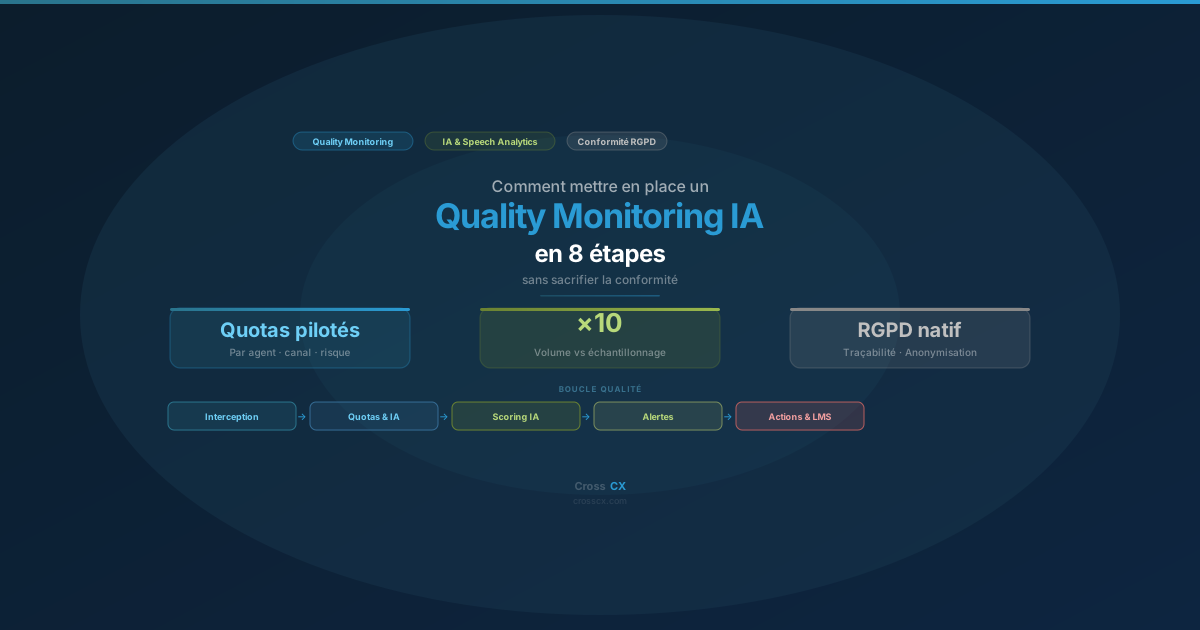
This is precisely the logic behind Cross CX Listener QM : intercept, sample, evaluate, analyze, trigger actions, and feed into training in a complete quality loop.
 Listener QM
 Cross-Mining
 GDPR Administration
 Listener LMS
Why Random Sampling Is No Longer Enough
Random sampling remains a common practice—but it becomes insufficient when it is the only control mechanism. In regulated industries (insurance, banking, healthcare, energy, telecommunications), it is no longer enough to simply state that controls are in place. It must be possible to demonstrate that the interactions analyzed were selected according to documented rules consistent with legal obligations and the company’s priorities.
It’s not a question of volume. It’s a question of method and governance: which agents, which channels, what types of interaction, based on what quotas, and how often?
The 8 Steps to Deploying Compliant Quality Monitoring
Before discussing AI, we need to clarify what needs to be evaluated: regulatory compliance, adherence to the script, interpersonal skills, handling objections, the duty to advise, mandatory disclosures, or signs of churn.
Each criterion must be observable and measurable. “Demonstrated empathy” is too vague. “Reformulated the customer’s request before proposing a solution” is something an AI can process.
Quality Monitoring comply with the GDPR retention periods, access rights, data minimization, anonymization, and, depending on the sector, specific traceability requirements.
Cross CX natively Cross CX these requirements — see the GDPRQuality Monitoring Speech Analytics page.
A rating grid designed for automation must be more structured than a traditional listening grid: closed-ended questions, clear rating scales, binary criteria, and interpretable thresholds.
Start with 8 to 12 criteria per interaction type —enough to generate actionable insights without diluting the analysis.
Once the scope has been defined—eligible interactions, approved quotas—AI steps in to score, categorize, and prioritize within that framework. It detects anomalies, signs of non-compliance, negative sentiment, or prohibited words.
Evaluators no longer have to sift through vast amounts of data to find problems; instead, they focus on the interactions prioritized by the system.
The Cross CX sampler Cross CX just a simple random draw: it’s a configurable selection engine that applies your business, legal, and organizational rules to every incoming data stream.
- The agent — minimum quota per employee
- The channel — voice, chat, email, social media
- The countryside — duty to advise, sales, complaints
- The level of risk — oversampling of reported interactions
- The frequency —weekly, monthly, or on demand
Alerts should be infrequent, reliable, and useful. A system that generates too many notifications causes fatigue and eventually gets ignored.
Start with high-stakes alerts: legal risk, failure to comply with a regulatory requirement, explicit mention of termination, prohibited statements, or failure to provide required information.
 Alerts & Quality Reporting
Quality scores, alerts, summaries, risk tags, and action plans must be able to be shared with the CRM, reporting tools, or training modules.
Cross CX positions Cross CX as an independent CCaaS platform capable of integrating telephony, CRM, bots, and business tools—without vendor lock-in.
An Quality Monitoring program shouldn’t stop at scoring. The results should trigger specific actions: coaching, training, script revisions, and procedure updates.
Calibration must be performed regularly—criteria, thresholds, quotas, and sampling rules are adjusted based on actual data and feedback from evaluators.