
Get an immediate response from AI—no form required. Would you prefer to speak with an expert? Schedule an appointment.
Coming into force on October 1 (February 1, 2019 for obligations relating to training and professional development), this directive impacts the distribution of insurance products, whether through salaried networks, direct sales or insurance intermediaries.
1 - Obligations
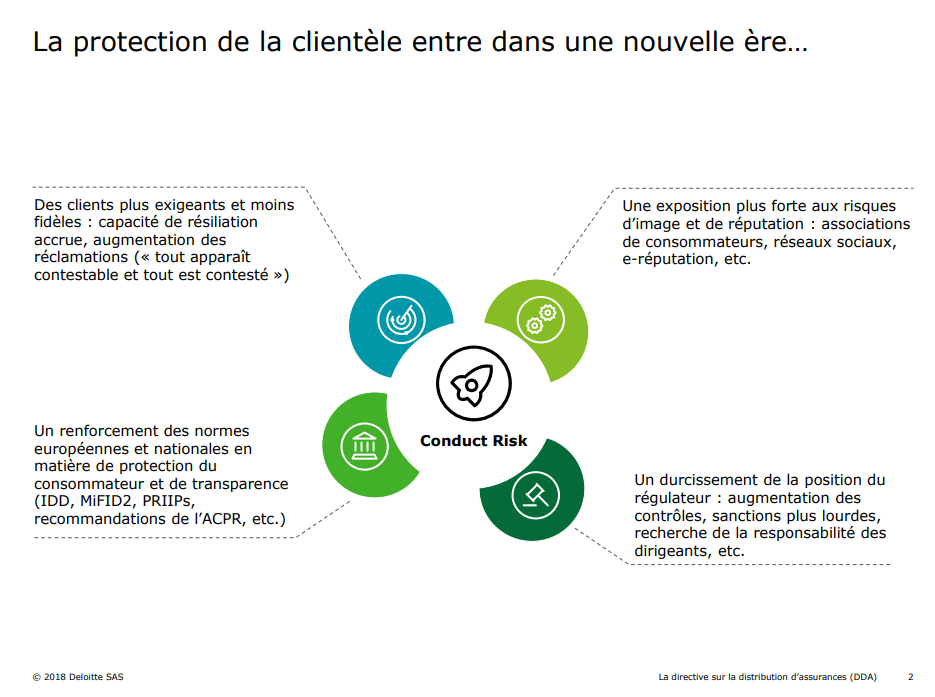
The new obligations of insurers and their distributors cover 5 main areas, through which the customer tends to be better served:
- Professional competence (Art. 10)
- Duty to advise (Art. 20 & 30)
- Information and transparency (Art. 17, 18, 19, 20 & 29)
- Remuneration and conflicts of interest (Art. 17 & 29)
- Product governance and monitoring (Art. 25)
2. Why CrossCX?
Here are some key features and a sample response plan highlighting the capabilities ofCrossCX in the context of the DDA and remote customer service centers in the insurance sector.
The functional benefits of CrossCX can be broken down into two areas:
Compliance monitoring and non-compliance management:
– General enhancement of compliance through quality control modules
– Automation of alerts and workflows
Skill development and governance:
– Facilitating skill development for teams
– Management of customer interactions and feedback
– In-depth analysis of all interactions and customer feedback
1/ Compliance monitoring
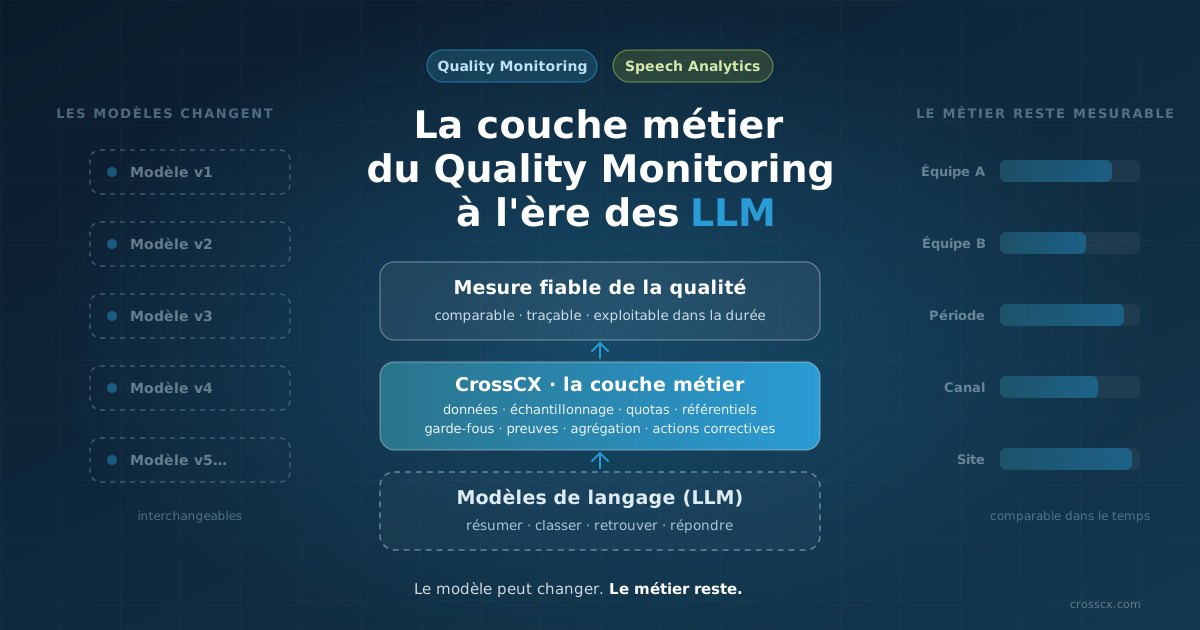
The CrossCX platform CrossCX the analysis and monitoring of all interactions between insurers and their customers, as well as the collection of customer feedback and reviews and the reporting of ALL available CRM data.
The platform helps insurers meet the challenge of increased oversight of their operations and methods, and turn these new requirements into an opportunity for the industry and the promotion of premium customer service.
The CrossCX modules CrossCX :
– a better understanding and highly detailed analysis of customer interactions and feedback,
– monitoring of service quality and tools to analyze compliance,
– tools to manage detected non-compliances
For example, Listener QM assist in monitoring sales compliance as part of the obligation regarding the Duty to Advise (Art. 20 & 30)
Another example: here’s how some of CrossCX clients CrossCX our quality monitoring tools quality monitoring monitor the compliance of telephone insurance sales in real time, without losing sales!
The AdminTOOLS are designed to enable the implementation of a powerful workflow system linked to your quality monitoring, for example to handle non-compliance issues in telephone sales:
1/ Sales via call center tool
2/ Playback and review by a dedicated sales compliance team
3/ Real-time detection of non-compliance via Listener QM
4/ Blocking of sales before contract issuance via our Admin Tools
and automatic scheduling of a new customer call
5/ Automatic customer callback to bring the sale into compliance
= new interaction between the agent and the customer
6/ Second validation of compliance processing via Listener QM
7/ continuation of the contract issuance process
2/ Skills development and governance
Bricks Listener LMS andListener QM used together, also enable the implementation of automated internal control and skills development processes for internal and external customer relationship centers, thereby facilitating compliance with professional capacity requirements (Art. 10).
For example: alerting in the event of failure to meet annual training requirements, etc.Ultimately, regulatory obligations tend to increase the intensity and regularity of controls in the sector. The strengthening of compliance tools allows insurance experts to focus on their business, managing their activities with complete peace of mind, meeting their new obligations, while protecting their customers in line with their interests.
More information on DDA? See Deloitte's presentation here: https: //www2.deloitte.com/content/dam/Deloitte/fr/Documents/services-financiers/deloitte_directive-distribution-assurances.pdf