

Get an immediate response from AI—no form required. Would you prefer to speak with an expert? Schedule an appointment.
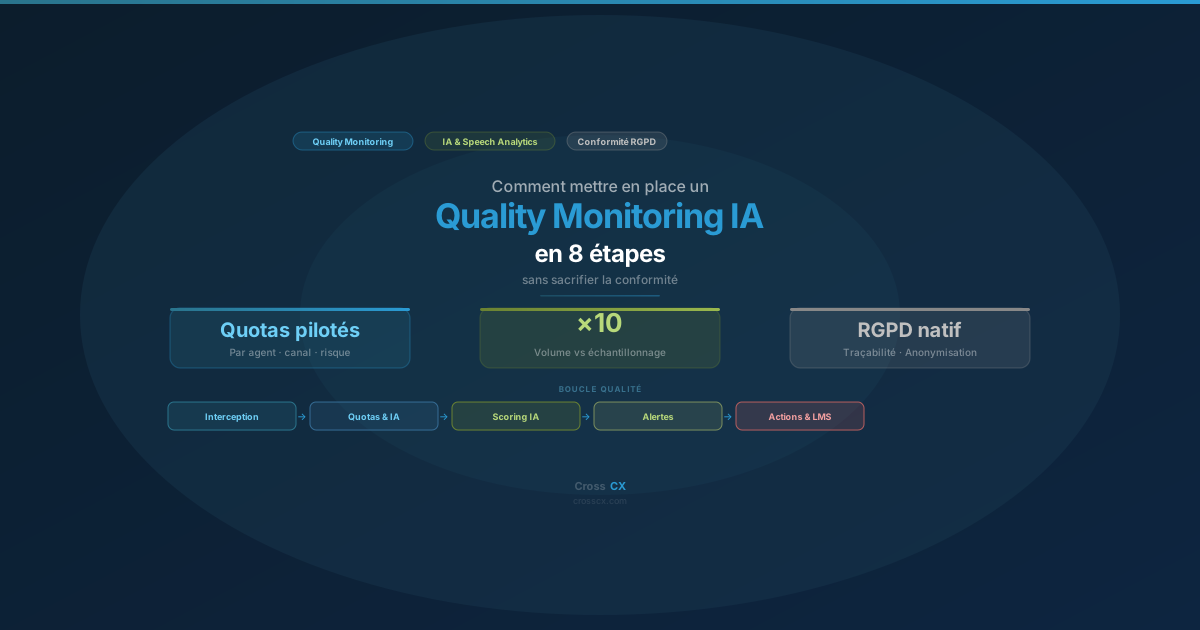
Dans un environnement où les attentes des clients évoluent rapidement, les centres de contact jouent un rôle clé dans la satisfaction et la fidélisation des clients. Cependant, les méthodes traditionnelles de gestion de la qualité, basées sur des échantillons aléatoires et des audits manuels, peinent à répondre aux besoins actuels. L’automatisation du Quality Monitoring, alimentée par l’intelligence artificielle (IA), offre une réponse stratégique à ce défi.
Why automate quality management?
Les processus manuels d’évaluation de la qualité sont souvent chronophages et limités en portée.
Les équipes Quality Monitoring peuvent généralement analyser moins de 5 % des interactions, laissant de nombreuses opportunités d’amélioration inexploitées. En revanche, l’automatisation du Quality Monitoring permet d’évaluer jusqu’à 100 % des interactions clients, qu’il s’agisse d’appels téléphoniques, de chats ou de messages sur les réseaux sociaux.
How does Quality Monitoring automation work Quality Monitoring
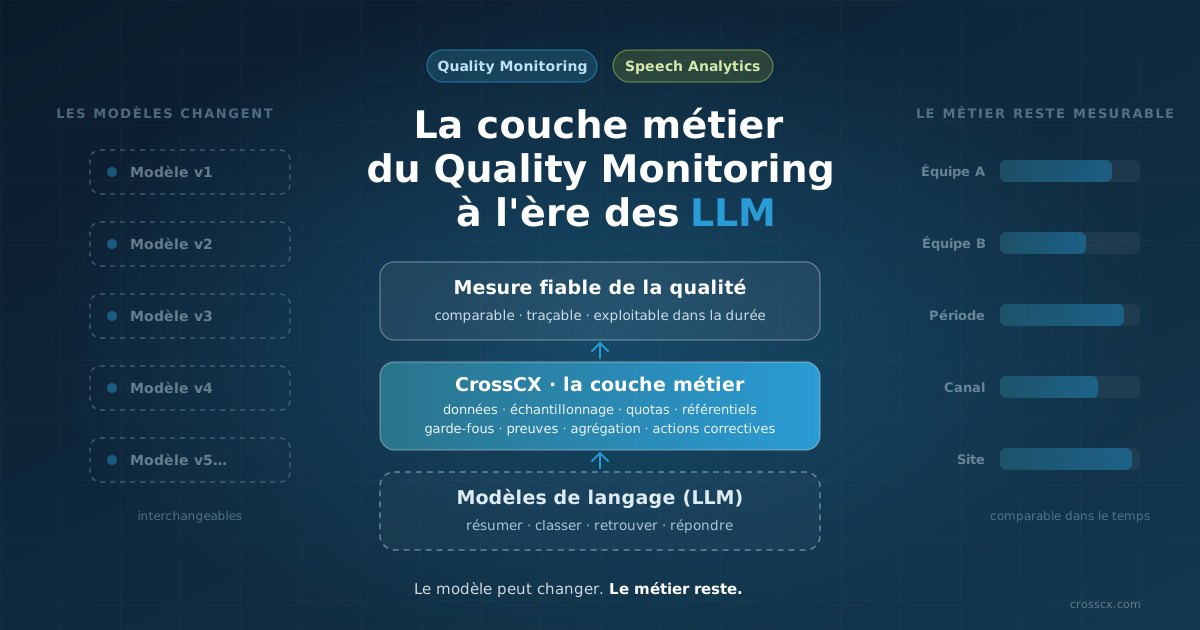
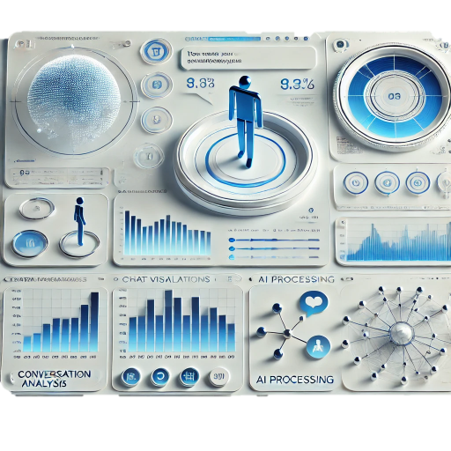
Modern platforms, such as Listener QM, use advanced artificial intelligence models to analyze transcripts and detect emotions and categorize interactions. Automated scorecards provide an accurate assessment of agent performance, while highlighting areas for improvement. In addition, these solutions can be integrated with CRM systems to provide insights that can be directly leveraged by team leaders.
Overall benefits of Quality Monitoring
Thanks to technologies such as conversational analysis and automatic scorecards, companies can :
- Improve regulatory compliance: identify gaps and ensure adherence to standards (e.g. ISO, GDPR).
- Optimize agent coaching: Provide feedback based on 100% objective data.
- Reduce risks: Identify signals of customer dissatisfaction early on to limit churn.
Adopter l’automatisation du Quality Monitoring offre une palette d’avantages concrets qui touchent autant les performances opérationnelles que l’expérience client.
- Improved evaluation accuracy by analyzing up to 100% of interactions in a given segment.
- Time and efficiency savings: less time spent on tedious listening tasks, allowing teams to concentrate on strategic evaluations.
- Proactive detection of problems such as negative trends in customer returns or product quality concerns.
- Optimize agent performance with immediate feedback and coaching tools based on reliable data.
- Reduce churn and complaint costs: quickly identify dissatisfied customers before they disengage.
- Enhanced support for strategic decisions by providing actionable insights into customer behavior and emerging trends.
- Strict compliance with confidentiality standards, with tools for masking and automatic deletion of sensitive data.
- Create healthy competition between agents with customized dashboards and incentive programs based on measurable results.
Case studies: concrete results in various sectors
In the online fashion sector, a key player reorganized its quality processes by adopting automated scorecards. This approach transformed sporadic, subjective audits into reliable, comprehensive assessments, while encouraging agent involvement. In just one year, the gains were significant, both in terms of reduced operational costs and improved customer experience.
In the BPO field, a leading outsourcing organization integrated agents into the feedback process, combining technological tools and engaging incentives. This participative model has encouraged team buy-in, while identifying previously invisible friction points in customer journeys.
Striking the right balance between automation and human expertise
L’automatisation du Quality Monitoring ne remplace pas les équipes humaines, mais leur permet de se concentrer sur des tâches à forte valeur ajoutée. Par exemple, tandis que l’IA identifie les tendances et évalue la conformité, les superviseurs peuvent se concentrer sur le coaching personnalisé et la gestion de situations complexes nécessitant de l’empathie.
Return on investment for automatic scorecards
The adoption of automatic scorecards in contact centers offers multiple strategic and financial advantages. By optimizing performance evaluation and interaction analysis, these tools generate a positive impact on several levels:
- Operational efficiency gains: Significant reduction in time spent on manual assessments, enabling teams to concentrate on strategic, high value-added initiatives.
- Improved customer satisfaction: Proactive detection of signals of dissatisfaction and accelerated problem resolution, reducing the risk of attrition.
- Cost optimization: Reduce the resources needed to manage quality processes and improve the efficiency of front-line teams.
- Enhanced compliance: Precise tracking of interactions and automated management of regulatory requirements, limiting the risk of non-compliance.
- Faster decision-making: Real-time, actionable insights for adjusting operational processes and strategies.
- Enhancing agent performance: Immediate, personalized feedback for continuous skills improvement and increased motivation.
Thanks to these benefits, automatic scorecards help maximize return on investment while supporting a strategy focused on customer satisfaction and operational excellence.
We have developed a white paper on the combined ROI of QM and Speech Analytics practice.Preparing the future of your contact center
Adopter une solution de gestion qualité automatisée, c’est plus qu’un simple gain d’efficacité : c’est un levier pour transformer votre centre de contact en un moteur de croissance stratégique. Avec des fonctionnalités comme l’analyse des sentiments, les résumés automatiques d’appels et les insights personnalisés, ces plateformes aident à aligner les objectifs opérationnels avec l’expérience client.
L’heure est venue de passer à l’action et d’embrasser le potentiel de l’automatisation du Quality Monitoring dans vos opérations. Non seulement vous améliorerez vos processus internes, mais vous jetterez également les bases d’une expérience client inégalée.