

Get an immediate response from AI—no form required. Would you prefer to speak with an expert? Schedule an appointment.
Conversation analysis involves studying exchanges between people, or between a person and an AI agent, to understand what is said, how it is said, and what the outcome is. In customer service, it refers to the automated analysis of calls, emails, chats, and messages to extract actionable data: reasons for contact, sentiment, intentions, fulfillment of commitments, and risk indicators.
The term originates from the field of linguistics, where conversation analysis has been a discipline in its own right since the 1970s. It has been adopted by the customer service industry to refer to what is also known as speech analytics or conversation analytics. This guide bridges the gap between the two, then explains what is measured, how it works, what to expect in a contact center, and how to choose a tool.
Key Takeaways
- Two approaches, one idea: studying how interactions are organized, whether for research or to manage customer relationships.
- Three levels of interpretation: what is said, how it is said, and how it sounds.
- AI has changed the scale: we can now analyze 100% of interactions rather than a sample listened to manually.
- Value lies in action: an analysis is only useful if it contributes to quality, training, processes, and the customer’s voice.
- A good tool is judged by its performance: mastery of the scope of the analysis, traceability down to the verbatim, costs, and compliance GDPR.
What is conversation analysis?
In linguistics: a discipline that emerged in the 1970s
Conversation analysis originated in the United States in the early 1970s, in the wake of ethnomethodology. Sociologist Harvey Sacks, along with Emanuel Schegloff and Gail Jefferson, demonstrated that ordinary conversation follows specific rules: turn-taking, the opening and closing of exchanges, the resolution of misunderstandings, and question-answer sequences. In France, Catherine Kerbrat-Orecchioni’s work on verbal interactions and Véronique Traverso’s book, *Conversation Analysis*, established the discipline.
In this first sense, conversation analysis begins with real recordings, transcribes them in detail, and describes the mechanisms that enable speakers to understand one another—or not.
In Customer Service: Automated Analysis of Interactions
In the business world, the term refers to the use of technologies (speech recognition, natural language processing, language models) to analyze conversations between customers and representatives—or between customers and bots— on a large scale. It also refers to speech analytics when voice is at the heart of the system, andconversational analysis in the broader sense.
The two fields are more closely related than one might think. The metrics used today in contact centers—such as speech overlap, silences at key moments, or the sequence of an objection and its response—are precisely the phenomena that linguists have been describing for fifty years. Technology simply makes it possible to measure them across thousands of interactions.
Conversation analysis, discourse analysis, conversational analysis: What are the differences?
These terms are often used interchangeably. However, they do not mean exactly the same thing.
Conversation analysis
It studies interactions: who speaks, when, how turns are taken, and how the participants cooperate or disagree. This is the broadest area of study.
Conversational Analysis
Strictly speaking, the school founded by Harvey Sacks, with its own method. In everyday publishing terminology, it is synonymous with automated conversation analysis.
Discourse Analysis
Focuses on texts and statements within their social, historical, or ideological context: the press, political speeches, and narratives. It does not necessarily involve multi-voiced exchanges.
Speech analytics
Customer relationship management (CRM) term: the set of technologies that automatically transcribe and analyze calls and written communications.
What a Conversation Analysis Measures
A customer conversation can be analyzed on three complementary levels. A robust tool combines all three, since each one compensates for the blind spots of the other two.
What is said
Reason for contact, intentions, objections, commitments made, legal notices, sales pitches, emerging topics.
How is it said?
The client’s and advisor’s feelings, how they evolve over the course of the conversation, irritation, doubt, conviction, and potentially problematic vocabulary.
How does that sound?
Rate of speech, respective speaking times, overlapping speech, silences at key moments: the true fluidity of the exchange.
Based on these three levels, the analysis produces results that can be used immediately:
- Categories: Why customers call, and how these reasons change over time.
- Metrics: compliance rate, complaint rate, percentage of tense interactions, by team, campaign, or time period.
- Summaries: the key points of a call in a few lines, for the next counselor or supervisor.
- Alerts: a sensitive client, a broken promise, a required disclosure that was overlooked.
- Verbatim quotes: the exact phrase used to justify each indicator, so that the measurement remains verifiable.
How Does Automated Conversation Analysis Work?
Regardless of the tool, the process follows the same general steps.
Collect and centralize
Retrieve call records, emails, chats, and messages from the phone system, CRM, or help desk, along with their metadata (agent, queue, campaign, date).
Transcribe
Convert speech to text using automatic transcription (speech to text), separating the speakers and adding a timestamp to each sentence.
Enrich
Applysentiment analysis, the categorization of phrases, questions asked of a language model, and call summaries.
Collaborate and Take Action
Consolidate results into dashboards, trigger alerts, and use the data to inform quality assessments, training plans, and customer feedback.
Applications in Contact Centers
Conversation analysis primarily benefits those who manage customer relations on a day-to-day basis: customer relations managers, quality managers, supervisors, and trainers.
- Understand the reasons for customer contact and reduce avoidable calls by addressing the root causes: a confusing website, a misunderstood email, or a delayed delivery.
- Assess service quality on a much larger scale than is possible with manual monitoring alone, and focus human monitoring where it is most effective.
- Support advisors with real-life examples, better-prepared debriefings, and training sessions triggered by identified discrepancies.
- Ensuring Compliance: Mandatory Disclosures, Obtaining Consent, and Regulated Sales Practices in Banking, Insurance, and Energy.
- Identify signs that a customer might leave —such as repeated dissatisfaction, a request to cancel, or mention of a competitor—to reach out to loyal customers in a timely manner.
- Use what customers actually say—without relying on surveys—to inform marketing and product development.
- Monitoring AI agents: Callbots and chatbots must also be monitored and evaluated according to the same standards as human agents (see ourAI agent evaluation service).
"The ' Speech Analytics ' module performs very well."
RATP, which samples its calls and links them to its listening grids at CrossCX.
Conversation Analysis, Speech Analytics , and Quality Monitoring : Who Does What?
These three concepts are complementary. Confusing them often leads to buying a tool that measures a lot but doesn't change anything.
Conversation Analysis
It answers the question, “What’s happening in our communications?” It provides data: topics, trends, signals, and verbatim quotes.
The Speech Analytics
It is the technological foundation that makes this analysis possible on a large scale: transcription, sentiment analysis, categorization, and language models.
The Quality Monitoring
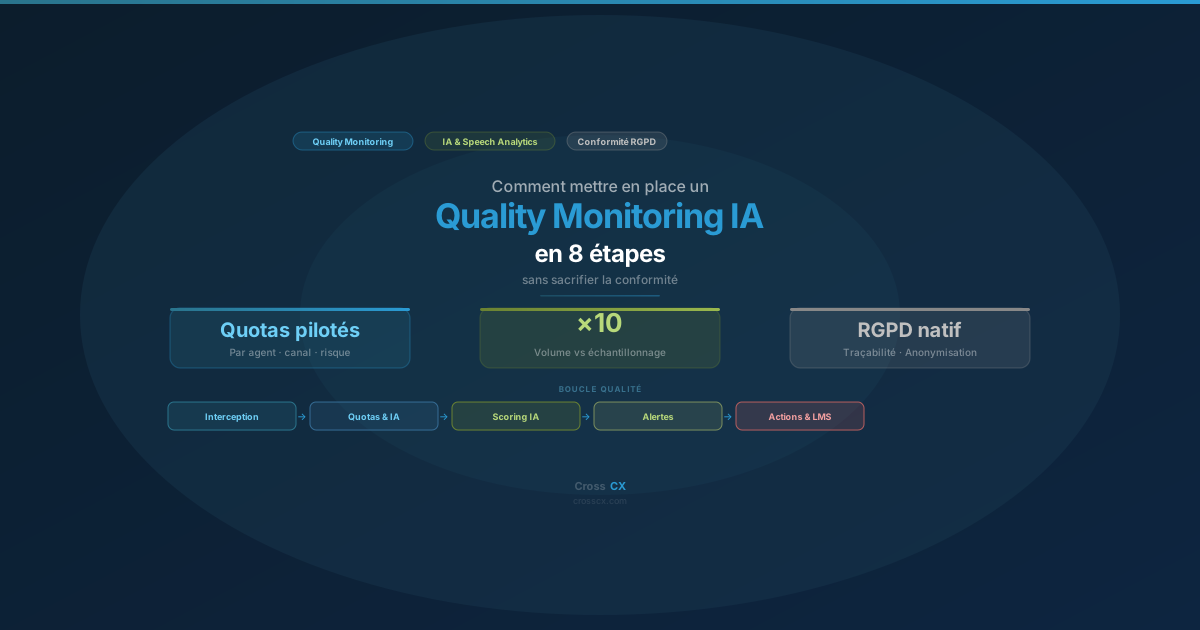
It answers the question, “Are our actions aligned with our goals?” It evaluates interactions using a rubric, then initiates debriefings, corrective actions, and training sessions. See our Quality Monitoring s solution and the AI-powered automated “Quality Monitoring .”
Conversation Analysis in the Age of Language Models
Large language models (LLMs) can already summarize a call, identify a topic, or explain why a customer was dissatisfied. For a one-off question about a conversation, an LLM is sufficient.
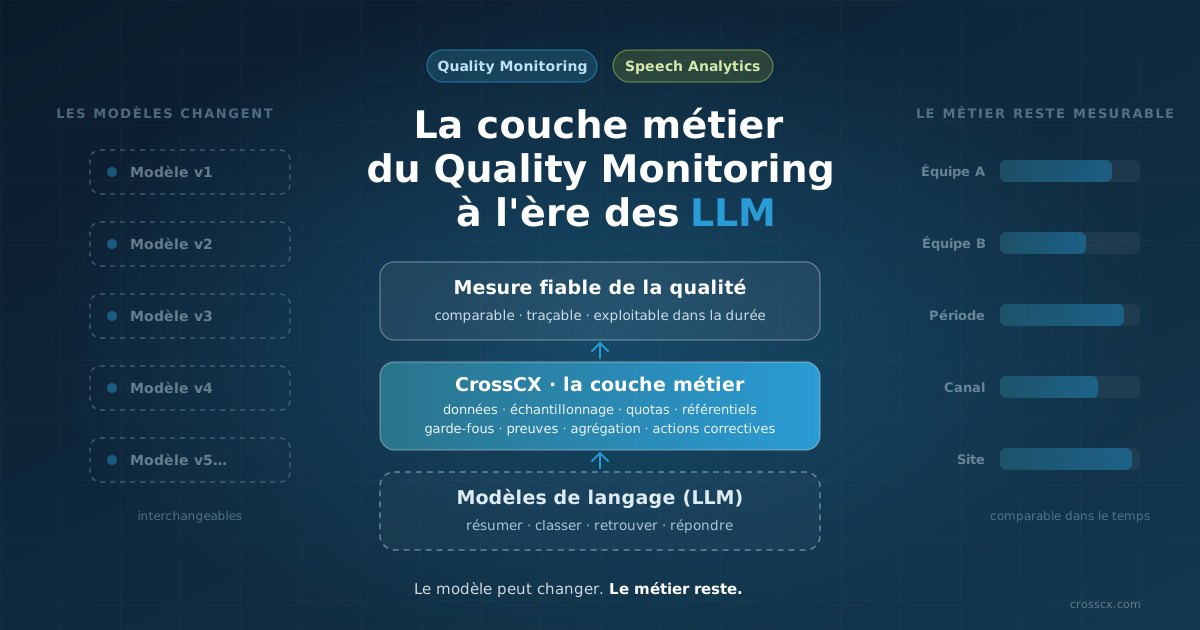
Everything changes when you need to analyze thousands of conversations in a reliable and repeatable way. You then have to decide which conversations to analyze and in what proportions, import and link the data, set quotas and budgets, calculate aggregated statistics, track each response back to its source sentence, and tie it all into the quality loop. This is what we call the business layer of “ Quality Monitoring ” in the era of LLMs.
An LLM answers a question. Conversation analytics software answers the same question across all your conversations—in a measurable, traceable, and actionable way.
How to Choose Conversation Analysis Software
Beyond the demos, a few criteria make all the difference once the tool is in production:
- Channel coverage: voice, email, chat, messaging, and AI agents all in a single repository.
- Transcription quality in your languages and under your actual recording conditions.
- Scope control: Choose the population, the campaign, or the type of call to be analyzed, selecting between targeted sampling and complete coverage.
- Traceability: the ability to trace each metric back to the exact statement that supports it.
- Customization: questions and metrics defined by your business teams, not just generic categories.
- AI Cost Management: Budgets, quotas, and usage are visible before the end of the month.
- Integration into the quality cycle: evaluations, debriefings, corrective actions, training.
- Compliance: hosting, anonymization of personal data, logging, choice between SaaS and on-premises.
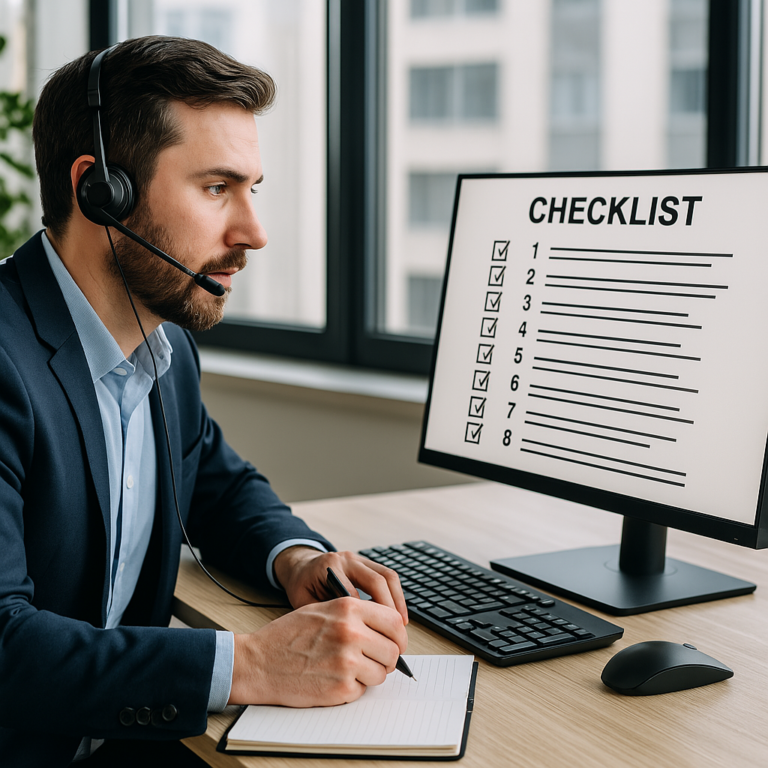
For more information, check out our checklist of 13 criteria for choosing an automated Quality Monitoring and Speech Analytics solution.
How to Get Started
Start with a business question
Reducing reminders, ensuring compliance with regulatory requirements, and understanding cancellations: a clear objective guides all configuration settings.
Define the scope
One category, one campaign, one time period. It’s better to have a well-defined initial scope than an exhaustive analysis that no one reads.
Translate the objective into questions
Formulate specific, verifiable questions about the conversation, and test them on a sample that your experts have listened to.
Wrap up the action
Decide in advance who receives what: notification to the supervisor, debriefing item, training module, product update.
GDPR : Recording and analyzing conversations requires informing individuals, defining a purpose and a retention period, and restricting access to the data. See how CrossCX addresses compliance at GDPR.
Frequently Asked Questions About Conversation Analysis
What is conversation analysis?
It is the study of interactions between communicators to understand what is said, how it is said, and what the outcome is. In linguistics, it is a discipline that emerged in the 1970s. In customer service, it involves the automated analysis of calls, emails, and chats to derive metrics and actions.
Which AI analyzes customer messages and conversations?
Several technologies work together: speech recognition transcribes calls, natural language processing detects sentiment and categories, and language models (LLMs) answer specific questions about each interaction. Conversation analytics software coordinates these components and links the results to quality assurance processes.
What is discourse analysis?
Discourse analysis examines texts and utterances within their social, historical, or ideological context. It is closely related to conversation analysis, which focuses on interactions: turns of speech, conversational sequences, and cooperation between interlocutors.
What is the method for analyzing conversations?
In research, we record real-time exchanges, transcribe them in detail, and then describe their structure. In business, we collect interactions, transcribe them automatically, enrich them (with sentiment, categories, and questions asked of the AI), and then aggregate the results to improve quality, training, and processes.
What is the difference between conversation analysis and " Speech Analytics "?
The goal of conversation analysis is to understand conversations. " Speech Analytics " refers to the set of technologies that enable this to be done automatically, particularly with regard to speech.
Is it possible to analyze 100% of conversations?
Yes, technically. But comprehensive coverage isn’t always the best option: targeted sampling—by campaign or call type—often yields clearer results at a manageable cost. The right tool lets you choose.
Is conversation analysis compatible with the " GDPR "?
Yes, provided that individuals are informed, a legitimate purpose is established, the retention period and access to the data are limited, and personal data is anonymized whenever possible.
Analyze your customer conversations with Cross-Mining
Discover CrossCX ’s conversation analysis software —available as SaaS or on-premises—to analyze your own data.
For more information:
Conversational Analysis (Wikipedia)
Catherine Kerbrat-Orecchioni, “Conversation Analysis” (Cairn.info)